
Landfill Leachate treatment system
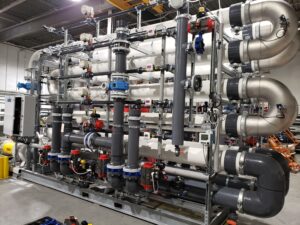
Landfill leachate treatment system for a hazardous waste landfill incorporates heavy metals pretreatment followed by a tubular MBR system.
The MBR reduces:
- ammonia
- phenol
- Polychlorinated Biphenyl (PCB)
- chemical oxygen demand (COD)
- volatiles and semi-volatiles
- and other contaminants adequately for discharge
The system reduces PFAS 30-60% and carbon is utilized to reduce PFAS to low ppt concentrations.
Landfill leachate treatment systems with Membrane Bioreactors (MBR)s have developed many unique process improvements for industrial wastewater applications. Dynatec successfully uses Ultrafiltration (UF), MBR and Reverse Osmosis (RO) for landfill leachate applications.
Landfill leachate treatment system requirements
Treatment can vary, depending on the discharge requirements, and the contaminants present
Landfill leachate is characterized by:
- High Total Dissolved Solids (TDS)
- Heavy metals
- High BOD
- Color
- High COD
- High ammonia
Landfill leachate treatment systems options
The MBR option: an aerated biological mixed liquor process operating at very high solids concentrations.
The advantages are:
- Long sludge age produces a well acclimated biomass. High concentration (typically 12,000 to 20,000 mg/l) provides very high rates of reaction
- Excellent nitrification and de-nitrification
- Smaller footprint then conventional aerated systems
- High-quality effluent as a result of using membranes for final clarification
- Lower sludge production than conventional systems
Typical MBR results in landfills:
| Parameter | BOD | COD | TSS | Ammonia |
|---|---|---|---|---|
| Influent | 500 | 4000 | 150 | 1000 |
| Effluent | <5 | 800 | <5 | <1 |
| % Removal | >99% | 80% | >96% | >99% |
The system produces bio-sludge, which can either be dewatered for disposal, or disposed of as a liquid sludge.
Alternative landfill leachate treatment options:
- Chemical precipitation of metals before MBR treatment
- RO after MBR treatment removes organic and inorganic contaminants, and color
- UF followed by RO
The two effluent streams from a RO system are:
- Permeate
- Concentrate (or reject)
This can be re-injected into the landfill. Its long-term effects on leachate concentrations should be considered.
Conclusion
The MBR process provides the highest possible levels of organic removal with essentially zero suspended solids in the effluent. This is the ideal feed system for RO treatment.
RO permeate can be used for other non-potable purposes:
- Irrigation
- Truck washing
- Dust control
Dynatec membrane treatment systems have successfully provided outstanding performance in many landfill leachate applications. Considerations for this technology include:
- Membrane treatment offers reliable, consistent landfill leachate
- Systems are highly cost effective, and require low levels of operator interface
- The best membrane system configuration for each application should be individually evaluated
- Membrane treatment is broadly applied in the US and abroad
Contact Dynatec Systems today to discuss your landfill leachate treatment solution.
https://www.dynatecsystems.com/industries/landfill-leachate-treatment/
SBR to MBR Conversion
SBR to MBR Conversion
Dynatec provided tubular ultrafiltration systems as part of an SBR to MBR conversion. The upgraded treatment system allowed the facility to meet all discharge requirements and increased the capacity of the plant. The SBR could treat 4,000 barrels per day and the upgraded plant utilizing an out-of-basin MBR treats up to 10,000 barrels of wastewater per day.
To meet direct discharge limits, the oil refinery needed to upgrade their treatment system. The existing SBR could not handle the volume of wastewater and was not consistently meeting the discharge quality limits.
The MBR reduced the COD to below 50ppm and phenols are reduced from over 750ppm to non-detect.
The solution for this plant was an oil water separator followed by out-of-basin membrane bioreactor (MBR). The permeate from the MBR met all requirements for discharging to sea water. COD in the permeate was less than 300ppm. Phenols in the permeate were consistently less than 1ppm.
Dynatec provided containerized systems for easy and fast installation at site.
Significant Savings
- Simple process
- Fewer chemicals needed
- Low maintenance
Technology Benefits
- Consistent high-quality water
- Low operating costs
- Minimal operator intervention required
- Reduced sludge disposal costs
Contaminants Removed
- Oil and grease
- Heavy metals
- COD
- BOD
- Suspended solids
- Phenols
Flexible Retrofits
Since the membranes were installed outside the reactor, the membranes allowed for easy retrofit to any bioreactor configuration (circular, rectangular, above or below ground), . Frequently, the existing infrastructure and building space can be reused with little or no changes.
Expandability
The membrane system is easy to expand, since the out of basin configuration allows for simple addition of more membranes, or membrane skids.
Better Performance
The MBR System eliminates many of the unit processes associated with conventional treatment systems. The bioreactor tanks degrade constituents normally considered recalcitrant and they eliminate solids carry-over from occurring, allowing long sludge retention times.
Contact Dynatec to discuss your application.
https://www.dynatecsystems.com/technologies/membrane-bioreactors/mbr-conversion-r…pgrade-solutions/
Silver Recovery at Microcircuit Plant
The Problem
A microcircuit materials production facility produces high purity silver in their process. The process produces a wastewater stream containing valuable dissolved silver compounds. The plant had an existing membrane treatment system to recover the silver from the wastewater, but the system had performance problems, required excessive maintenance and chemical cleaning costs were high.
The Solution
When the plant expanded its operations, they performed an evaluation. The choice was between expanding the existing membrane system or installing a Dynatec membrane system designed for simple automatic operation with low operating costs. Dynatec was ultimately selected to provide a complete system because the Dynatec design offered a more reliable, easier to operate process. The installation includes transfer pumps, two reaction tanks, three ultrafiltration skids designed for 25 gpm each with room for expansion, a sludge conditioning system, and a filter press.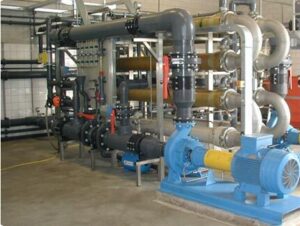
The Process
Wastewater from the process is stored in an equalization tank. Transfer pumps deliver the equalized wastewater to the first reaction tank where DTC (dithiocarbamate) is added to react with the aqueous silver compounds to form insoluble metal salts. The water then enters another reaction tank where the pH is adjusted to optimize precipitation of the silver compounds.
The precipitated silver compounds are then filtered in one of the three ultrafiltration skids. The ultrafiltration system, using tubular PVDF membranes are designed for automatic operation. When the membranes become fouled, the operator initiates an automatic cleaning, and the system performs a chemical membrane cleaning and the ultrafiltration skid is brought back into service.
The permeate from the ultrafilter is discharged and the concentrated silver is sent to a sludge conditioning tank where a high molecular weight cationic polymer is added to aid in filterability of the sludge. The sludge is then sent to a filter press and the cake is sent to a silver reclamation facility.
Conclusion
The installation of the new system was successful. The system has been operating for several years. Current operation at the plant consists of operating two filtration skids at a time with one as a standby. The system is designed to add capacity by simply adding membranes to the existing UF skids. Operators are happy with the system’s operation and the lower amount of maintenance and chemicals required.
Contact Dynatec to discuss your wastewater application.
https://www.dynatecsystems.com/industries/heavy-metals-removal/
Ultrafilter for Metals Removal
A metallurgy facility needed to remove metals from their wastewater. Bench scale treatability work performed by Dynatec proved the effectiveness of the ultrafilter (UF) system. The UF system removed chromium, copper, zinc, nickel, and other metals to low parts per billion levels needed for surface water discharge.
The company produces ferrous metals (atomized steel and sponge iron) for use by auto parts makers and other manufacturers. The steel and iron powders are used to make structural parts, filters, and bearings, as well as, in friction applications such as brake pads and linings.
Dynatec has hundreds of installations in similar applications.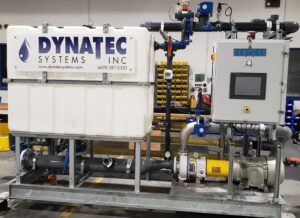
Ultrafilter for metals removal
Ultrafilter for metals removal can be achieved by chemical precipitation simply using hydroxide or sulfide precipitation. However, complexed metals have other chemistries available to cause precipitation to occur, typically in a simple one-step operation. There is no need to enlarge or flocculate the precipitated crystals, as is typical in conventional chemical systems since the pore structure of the membrane will retain the small precipitated crystals.
When oils are or may be present in the waste stream, the positive filtration provided by ultrafiltration prevents upsets that can occur with settlement or flotation devices. The membrane prevents passage of both oils and solids, including the precipitated heavy metals from passing, creating a concentrate of the metals.
If the waste stream consists principally of oils, a concentrate of the oils that will also contain the heavy metals is created that can be disposed of to oil recyclers. When the same type of waste is treated using DAF or clarifier technology, a sludge is created that can only be disposed to a landfill, and the benefit of reuse is lost and disposal is more expensive.
When the waste stream consists mostly of metals and suspended solids, the addition of a precipitant allows the waste to be simply ultrafiltered. The amount of sludge created is much less than the amount created using other technologies.
Dynatec’s design of ultrafiltration systems for heavy metals separation utilizes tubular membranes operated at high flow velocities. This design allows for high concentrations of metals and/or oils, and/or suspended solids in solution while minimizing cleaning maintenance of the membrane system.
Dynatec has provided systems for:
- Heavy metals removal
- Precious metals removal and recovery
- Complex wastewater streams
Ultrafilter for Metals Removal Solutions
- Ultrafiltration (UF) for metals removal
- Heavy Metals
- Metals in wastewater with oils and grease
- Precious Metals
- Metals in wastewater with chelating agents
- Ultrafiltration (UF) for reuse
- Reverse Osmosis (RO) for high purity water reuse
- Complete turnkey system solutions
- Filtration for sewer discharge of direct discharge to environment
Dynatec has designed and provided systems for reuse for:
- Wash water
- Rinse water
- Plant processes
- Cooling tower
- Boiler feed
Contaminants Removed
- Oil and Grease
- Heavy Metals
- Precious Metals
- Lubricants
- Surfactants
- Acids
- Biochemical Oxygen Demand (BOD)
- Chemical Oxygen Demand (COD)
- Suspended Solids
- Dissolved Solids
Please reach out if you have any metals removal projects that we can help with.
https://www.dynatecsystems.com/technologies/membrane-technologies/ultrafiltration-systems/
Turnkey Solutions
Turnkey solutions provided by Dynatec include equalization tank, oil water separator, ultrafiltration (UF) process tank, UF system, and permeate and concentrate tanks. The customer, an industrial research facility, had a wastewater treatment facility that also treats the waste from several other manufacturers that occupy buildings nearby, recently purchased an UF system from Dynatec. The UF system replaced a DAF system that was not effectively handling the contaminant load from these facilities, including oily waste, heavy metals, and suspended solids due to the frequent changes in the wastewater characteristics. The customer also chose to have Dynatec install the system. The UF system has allowed them to meet their discharge requirements with less operator attention and effort.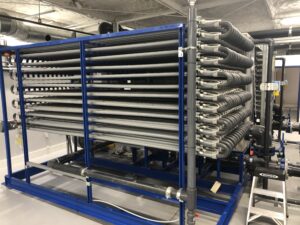
Dynatec’s team of mechanical, chemical and electrical engineers have decades of experience to provide everything you need, from start to finish. This includes evaluation, system design, installation, system startup and training. Our focus has always been to produce the most cost-effective long-term answer for our customer. All turnkey systems are custom designed and installed for your specific needs.
Two different sets of disciplines are employed for this stage of the process. First, years of process experience produce effective process design. Our ownership and operation of treatment systems produces invaluable field experience that is translated into operator-friendly equipment. Next, the process design is translated into a complete integrated treatment systems by our experienced engineering staff.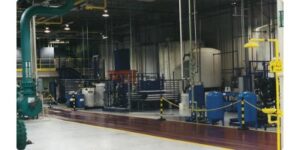
- Single source of responsibility
- Problem evaluation
- Process and system design
- Equipment
- Installation service
- System startup
- System startup consists of a three-step process:
- The equipment is commissioned by proving each of the field instruments
- The equipment is wet-tested
- Equipment is operated on process fluid to prove operation under normal conditions
- Training by Dynatec engineers
Dynatec obtains membranes from a wide variety of suppliers, always aware of the need to produce lowest lifetime cost. Our suppliers produce membranes in a variety of materials, as well as a number of configurations for most effective solutions. In addition, Dynatec procures other equipment required to complete the project.
Dynatec manufactures modular equipment so that installation costs are kept to a minimum. Supervised by experienced competent engineers. Our usual method of operation is to hire local contractors approved by our customer.
Proven Installed Turnkey Solutions
At Dynatec, we are not just experts in providing reliable equipment for industrial applications, we also provide the proven solutions that our global clients need.
For more information on our design-build turnkey solutions for your install, please contact us today.
RO Concentrate Evaporation
Waste Management’s Atlantic Landfill RO Concentrate Evaporation Project Short Listed for 2022 GWI Industrial Project of the Year
This project utilizes Dynatec’s MBR and RO. The reject from the RO is evaporated using waste heat from the on-site power generation. It is a great project overall and this is a cost effective and sustainable approach to handling RO reject.
WAVERLY, VA – WM’s 120,000GPD leachate evaporation project, developed in partnership with Heartland Water Technology, was shortlisted for the Global Water Intelligence’s 2022 Industrial Project of the year. A 120,000GPD (450m3/d) evaporation solution for reverse osmosis (RO) concentrate at the Waverly landfill site in Virginia, US., this project addresses the challenges of RO concentrate waste stream treatment and disposal.
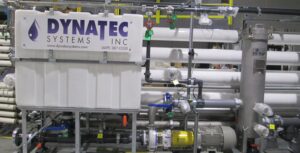
Dynatec specializes in extensive industrial reverse osmosis (RO) membrane systems and nanofiltration (NF) membrane systems to remove soluble components of wastewater that may not have been removed by primary treatment. In most cases, the purified water can be reused.
RO is capable of rejecting soluble constituents of aqueous streams, such as:
- Bacteria
- Salts
- Sugars
- Proteins
- A wide range of organics and colors
- Improves the color, taste and properties of the fluid
This process is commonly used to purify water and remove salts and other impurities. It can be used to purify fluids such as ethanol, which will pass through the reverse osmosis membrane, while rejecting other ions and contaminants from passing.
Industrial Reverse Osmosis/Nanofiltration systems
The most common use for reverse osmosis is in purifying water. It is used to produce water that meets the most demanding specifications. This differs significantly from other RO systems that are often only designed to treat potable water. Our system is specifically designed to accommodate:
- Minimize reject volume
- Variable characteristics
- Minimize fouling
RO and NF Technology
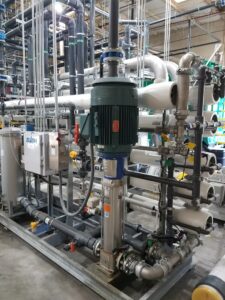
RO uses a membrane that is semi-permeable, allowing the fluid that is being purified to pass through it, while rejecting the contaminants that remain. Most NF and RO systems are operated in crossflow to allow the membrane to continually clean itself.
Integrated clean-in-place (CIP)
The membrane skid has an integrated CIP system on the skid. This is especially important for wastewater reuse systems because the cleaning frequency of the skid is often higher than in other RO applications. With an integrated CIP system, cleaning is fast and easy, minimizing th
e operator’s time.
Contact Dynatec to discuss your wastewater application.
https://www.dynatecsystems.com/industries/landfill-leachate-treatment/
Decentralized Wastewater Treatment Facility
Dynatec provided the membrane system for a demonstration plant situated directly adjacent to the Anaheim, CA City Hall. The system is designed to pump wastewater from a local sewer line, treat the wastewater for reuse, and return the waste activated sludge and screenings to the sewer line.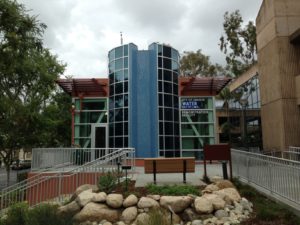
The DynaLift™ out-of-basin membrane system was selected because:
- The high flux rates achieved by the DynaLift™ system allowed for a small footprint
- High MLSS concentrations allows for smaller reactor tanks
- The positive filtration achieved with MBR provides consistent high-quality discharge
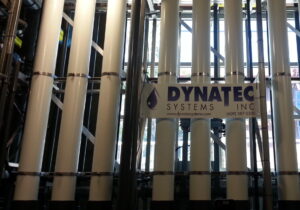
- The out-of-basin design allows for better demonstration of the technology
- The membrane construction allows for high removal of bacteria and virus – demonstrated 5-log removal of bacteria and 4-log removal of virus.
The plant design is for two trains with the first train presently installed. The design flow of this plant is 75,000 gallons per day, and due to internal water uses, such as screen flushing, the net output of the final plant when fully installed will be 104,350 gallons per day. The recycled water is used for irrigation and toilet flushing within the requirements of California’s Title 22 Regulations.
Plant automation design allows for periodic operator attention only when equipment maintenance or chemical refilling is required.
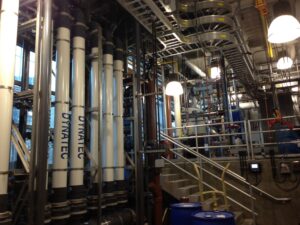 Following treatment in the MBR, the effluent is further treated using ozone followed by UV for ozone destruction and chlorine addition at 1 mg/L to ensure no re-growth in the final effluent.
Due to the proximity of City Hall and the fact that the plant is in a highly populated area, a state-of-the-art odor control system was installed. With the standard Dynatec design odor control is not typically required.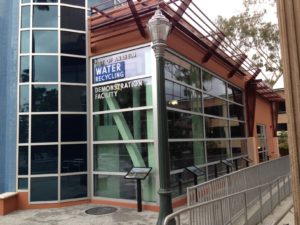
This is the first facility in California to use external MBR membranes, ozone and chlorination for water recycling. The use of decentralized wastewater treatment facilities is increasing and the City of Anaheim is in the forefront of this.
Contact Dynatec Systems today to discuss your wastewater reuse project.
https://www.dynatecsystems.com/industries/sanitary-wastewater/
PFAS Removal from wastewater
Per- and polyfluoroalkyl substances, or PFAS, is a group of thousands of synthetic chemicals that were used for decades in the manufacturing of many consumer goods like waterproof clothing, non-stick pans, stain resistant fabrics, food packaging, and in industries like paper and cardboard manufacturing, metal plating, wire manufacturing, plastic manufacturing, and many other applications.
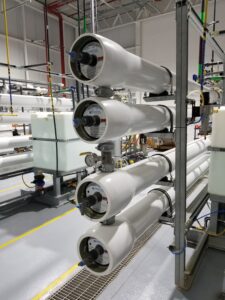
While providing desired characteristics to the many products in which they were used, PFAS chemicals have been tied to various negative health effects. Also of concern is the fact that they are very stable and break down very slowly in nature. PFAS chemicals are found in the environment and in the bloodstreams of people all over the world.
Dynatec has provided systems to remove PFAS from industrial wastewater to customers across the country and has dozens of systems in operation. While there are other technologies in various stages of development, there are two proven technologies for removing PFAS from industrial wastewater: carbon and reverse osmosis (RO). Dynatec has used both granular activated carbon (GAC) and RO for PFAS removal and we can help with the selection of treatment technology for a given application.
Landfills are a major accumulation location for PFAS as most of the PFAS laden products ultimately end up there. As the leader in landfill leachate treatment, Dynatec Systems has vast experience in treating complex, high strength wastewater and removing PFAS from these wastewater streams. With discharge limits shrinking across the country to single digit parts per trillion (ppt) for some of the most common PFAS compounds like PFOS and PFOA, most of our customers have non-detect levels of nearly all of the tested PFAS chemicals, even where the raw wastewater or leachate has individual PFAS compound concentrations of 3,000 to 5,000ppt or more.
We can design a system to meet any discharge requirement.
Please contact us today to discuss your PFAS removal needs.
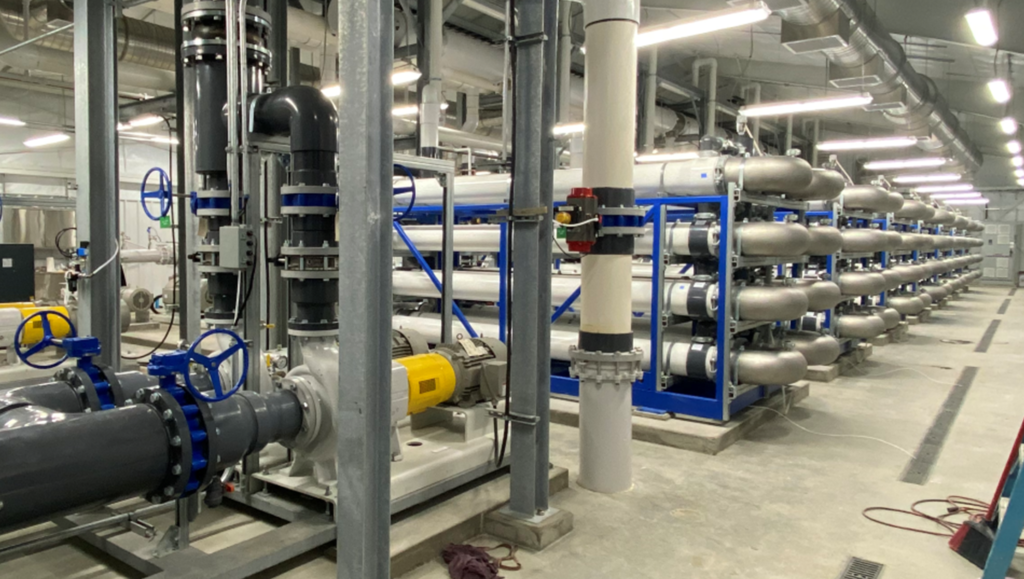
Tubular UF MBR system for dairy wastewater
Tubular UF MBR system was a conversion of an existing extended air system. An existing bioreactor is also being utilized. The capacity of the existing bioreactor was doubled with an increase in the mixed liquor solids concentration and an upgrade of the fine bubble aeration to slot injector aeration.
Membrane Bioreactors
Membrane bioreactors offer a unique and effective solution for the treatment and reuse of industrial wastewater in industries such as landfills, automotive, aerostructures, distilleries and dairies. Our industry-leading designs and innovation also deliver superior performance for sanitary wastewater and biological nutrient removal applications.
The MBR configuration has proven to be optimal for treatment of many industrial wastewaters when treatment efficiency is an important consideration.
The MBR is the ideal bioreactor configuration for treatment of organic or inorganic contaminants present in industrial wastewaters. MBRs operate at a higher efficiency while achieving consistent design performance objectives. This makes MBR a more cost effective method of treatment when performance and tank requirements are considered.
Bioreactor systems such as the conventional activated sludge system, sequencing batch reactor system and trickling filters are typically designed for operation at a lower volumetric removal rate, requiring larger tanks and more space. These conventional systems often experience upsets that inhibit settling and therefore require much more operator attention than a membrane bioreactor.
The MBR has proven to be optimal for treatment of many industrial wastewaters because it is less susceptible to upsets. The MBR’s performance is not affected by changes in sludge settleability like the conventional systems, making MBR a wise choice for industrial systems that have more difficult to treat waste streams. Dynatec has over 42 years experience in dealing with difficult to treat industrial wastewaters using membrane filtration.
For more information on tubular UF MBR system, please contact us today.
Chemical Manufacturer
Chemical manufacturer needed a wastewater treatment plant capable of producing high-quality permeate from raw wastewater. They had high concentrations of oil and grease, Total Suspended Solids (TSS), Biochemical Oxygen Demand (BOD), and Chemical Oxygen Demand (COD). Dynatec designed and manufactured a system including an Ultrafilter (UF) to removed Oil & Grease (O&G) and TSS. An MBR to further treat BOD and COD. The permeate is free of O&G, TSS, and BOD, while COD is greatly reduced. The system was designed so future expansion is easily achieved.
Chemical wastewater treatment utilizing membrane systems that range from selective separation of product to wastewater treatment and reuse. Dynatec Systems has provided many different chemical wastewater solutions.
Chemical Manufacturer Wastewater Treatment Solutions
- Ultrafiltration (UF), Nanofiltration (NF) and Reverse Osmosis (RO) for selective separation of product for recovery
- MBR biological treatment
- Wastewater reuse with MBR
- Conversions of existing systems to MBR
- Expand existing bioreactor treatment capacity
- Improve discharge quality
- Produce water for reuse
- Reduce surcharge
- High purity reuse with MBR and RO
Contaminants Removed
- Organics
- Inorganic solids
- Phenol
- Solvents
- Oils
- Acids
Ultrafiltration offers the following advantages over conventional separation:
- No chemical required
- Very little labor required
- Simple mechanical process
- Less sludge
- Ability to concentrate the retentate for beneficial use
- Less space required
- Overall lower operating costs
Dynatec specializes in extensive RO and NF membrane systems to remove soluble components of wastewater that may not have been removed by primary treatment. In most cases, the purified water can be reused.
RO is capable of rejecting soluble constituents of aqueous streams, such as:
- Bacteria
- Salts
- Sugars
- Proteins
- A wide range of organics and colors
- Improves the color, taste and properties of the fluid
RO can be used to purify fluids such as ethanol, which will pass through the reverse osmosis membrane, while rejecting other ions and contaminants from passing.
RO/NF systems
The most common use for reverse osmosis is in purifying water. It is used to produce water that meets the most demanding specifications. This differs significantly from other RO systems that are often only designed to treat potable water. Our system is specifically designed to accommodate:
- Minimize reject volume
- Variable characteristics
- Minimize fouling
RO and NF Technology
RO uses a membrane that is semi-permeable, allowing the fluid that is being purified to pass through it, while rejecting the contaminants that remain. Most NF and RO systems are operated in crossflow to allow the membrane to continually clean itself.
Integrated clean-in-place (CIP)
The membrane skid has an integrated CIP system on the skid. This is especially important for wastewater reuse systems because the cleaning frequency of the skid is often higher than in other RO applications. With an integrated CIP system, cleaning is fast and easy, minimizing the operator’s time.
Tubular Configuration:
- Higher permeate rate
- Lower rates of fouling
- Higher concentration of retentate
- Easier to clean
- Longer membrane life
- Low operating cost
https://www.dynatecsystems.com/technologies/membrane-technologies/ultrafiltration-systems/